
Most people treat the railing as the last decision in a deck project. The contractor shows up with a catalog, the homeowner picks something that looks fine, and nobody thinks about it again until the wood starts splitting three years later.
But if you actually look at a finished deck or balcony, the railing is one of the most visually dominant elements on the entire facade. It frames the view. It sets the tone. And over the life of the structure, it determines how much time and money you will spend on upkeep.
That is a big part of why aluminum railing systems have become one of the fastest-growing categories in residential and commercial construction. Not because the material is new (aluminum has been used in architecture since the early twentieth century) but because modern engineering and powder-coating technology have made these systems dramatically better than they were even ten years ago.
This article breaks down why the shift is happening, what makes aluminum railings architecturally compelling, and how to evaluate the options on the market today.
The Problem With Traditional Railing Materials

Source: https://ondekvinylworx.com/wp-content/uploads/2021/04/installer.jpg
For decades, wood was the default. It was cheap, familiar, and every contractor knew how to work with it. But anyone who has owned a wood-railed deck for more than a few years knows the reality: annual staining, warping, cracking, and eventual rot. In coastal or humid climates, that timeline gets cut in half. A wood railing that looks great in year one can look neglected by year three if you fall behind on maintenance.
Steel and wrought iron brought more strength and a more formal look, but they introduced their own headaches. Rust is a constant battle, especially in regions with salt air, heavy rain, or freeze-thaw cycles. Powder-coated steel holds up better, but the moment that coating chips (from impact, thermal expansion, or just regular wear) corrosion takes over fast. Repainting steel railings is slow, expensive work.
Vinyl tried to position itself as the low-maintenance answer, but it came with aesthetic and structural trade-offs that are hard to ignore. Vinyl yellows with UV exposure over time. It flexes under load in a way that feels flimsy. And from a design standpoint, the limited color and profile options make it tough to integrate into anything beyond a basic suburban deck.
Each of these materials solves part of the problem (cost, strength, or low maintenance) but none of them solve all three at once. That gap is exactly where aluminum has found its footing.
What Makes Aluminum Different
Aluminum does not rust. That single fact accounts for most of its appeal in exterior applications. Unlike steel, aluminum forms a natural oxide layer that protects it from corrosion without any applied coating. Add a high-quality powder coat finish, particularly one that meets AAMA 2604 or AAMA 2605 standards, and you have a surface that resists UV degradation, chalking, and fading for decades. The only maintenance required is an occasional wipe-down with soap and water.
But corrosion resistance alone does not explain the architectural shift. Aluminum is also remarkably strong relative to its weight. Modern railing systems use precision-extruded profiles that concentrate material where structural loads are highest and eliminate it where it is not needed. The result is a railing that exceeds building code requirements while using slimmer, more elegant posts and rails than wood or steel would allow.
This engineering philosophy (put the metal where it matters) is what allows designers to create railing profiles that look lighter without sacrificing safety. It is the reason topless glass railings, minimalist picket systems, and frameless designs keep showing up on high-end residential projects. The aluminum structure does the heavy lifting while staying out of the sightline.
The Rise of Glass-and-Aluminum Railing Systems

Source: https://www.innovativealuminum.com/wp-content/uploads/2026/03/3824Sunridge1Jun10PRINT-1-scaled.jpg
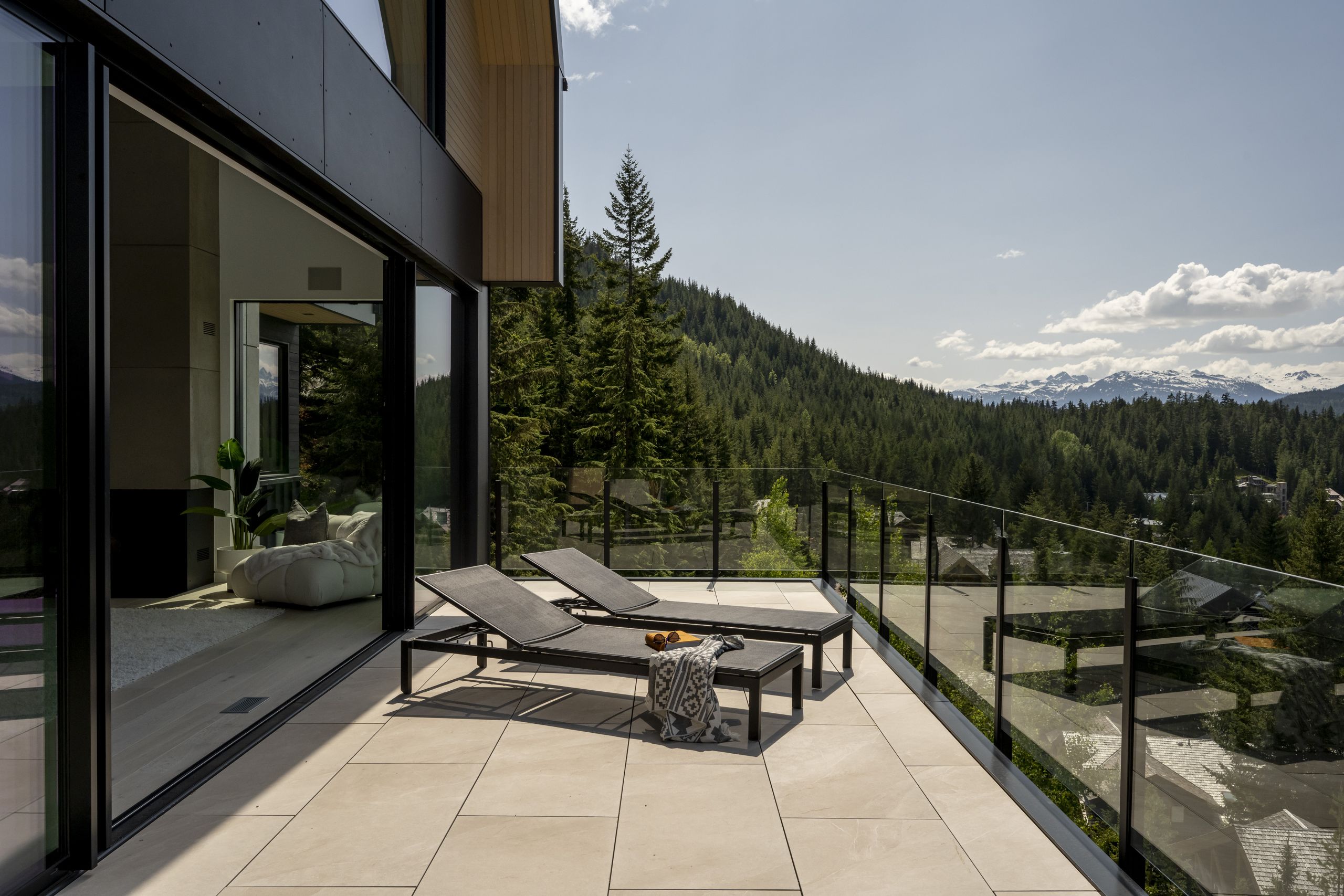
The most significant trend in modern railing design right now is the pairing of aluminum frames with tempered glass panels. This combination has moved well beyond luxury waterfront homes and into mainstream residential construction, and the reasons are straightforward.
Glass panels eliminate the visual interruption of traditional balusters or pickets. On a deck overlooking a lake, a mountain range, or even a nicely landscaped backyard, the difference is hard to overstate. The view becomes the feature, and the railing all but disappears.
There are two main approaches to glass railing design. The first is the framed or component system, where aluminum posts and a top rail hold glass panels in a structured frame. This gives you a clean, architectural look with the tactile reassurance of a top rail, something a lot of homeowners prefer on upper-level balconies.
The second is the topless or frameless system, where glass panels are secured at the base by aluminum posts with no top rail at all. This is the more dramatic option. Companies like Innovative Aluminum Systems have developed patent-pending topless systems (their Infinity line, for example) that use solid aluminum extrusions to hold half-inch tempered glass securely while virtually disappearing from the sightline. The visual effect is hard to beat: an unbroken panorama with nothing in the way.
Both approaches are engineered to meet or exceed the National Building Code of Canada and the US International Residential Code. This is worth calling out because the visual lightness of glass-and-aluminum systems sometimes makes people question their strength. In practice, a well-engineered aluminum-and-glass railing will outperform a traditional wood railing in load testing by a comfortable margin.
Powder Coating: The Hidden Differentiator

Source: https://www.innovativealuminum.com/wp-content/uploads/2017/04/landing-powder-coating-1170px.jpg
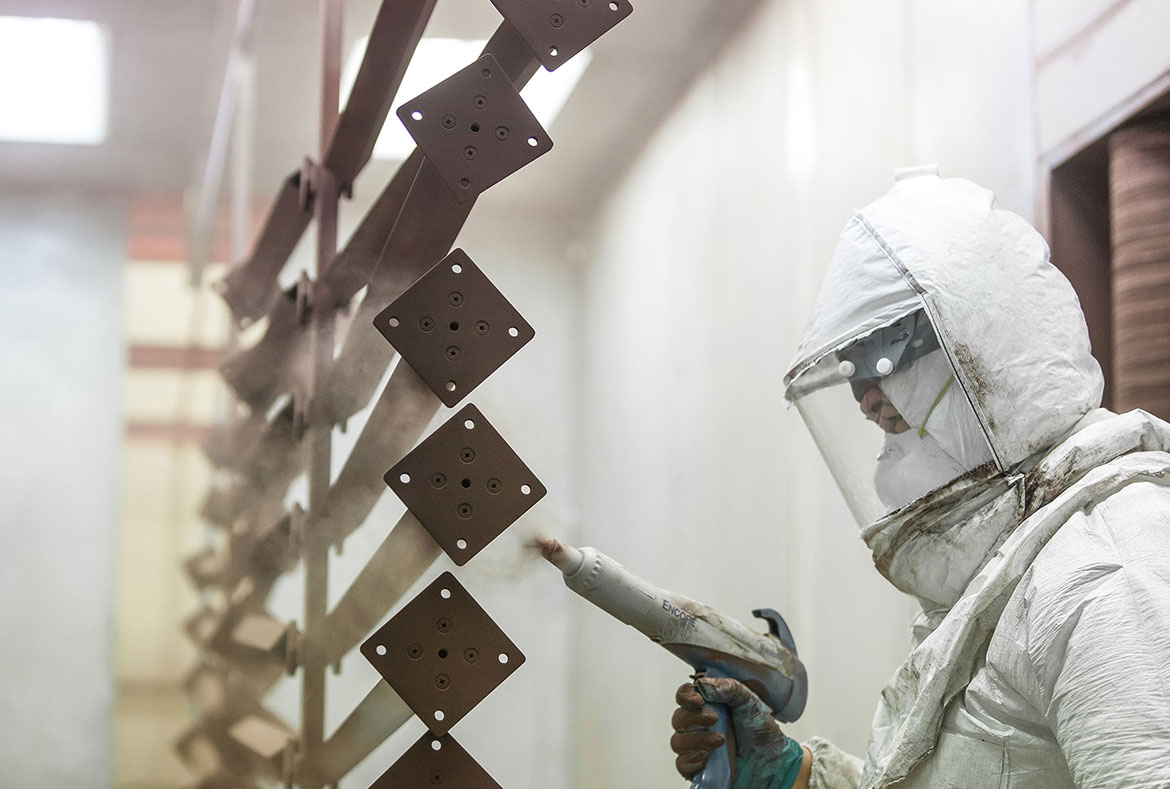
Not all aluminum railings are built to the same standard, and the finish is usually where the quality gap becomes obvious. Powder coating is the industry-standard finishing process, but the specifications vary a lot between manufacturers.
At the entry level, many companies use coatings that meet AAMA 2603 standards, which is the minimum for architectural applications. These finishes are fine for interior use or sheltered locations but tend to break down faster under heavy UV or coastal exposure.
The next tier up, AAMA 2604, is where most quality-focused manufacturers operate. These coatings undergo rigorous testing for UV resistance, humidity tolerance, and color retention. They use a fluoropolymer resin that holds up significantly better than standard polyester-based coatings. If you are building in British Columbia, Ontario, Florida, or anywhere else with serious sun and moisture, this is the specification you want.
At the top end, AAMA 2605 coatings deliver the highest level of weather and UV resistance on the market. These are the same finishes specified for high-rise curtain walls and major commercial facades. Some residential railing manufacturers offer this tier for homeowners who want the absolute longest-lasting finish available.
The practical takeaway: when comparing aluminum railing quotes, always ask about the powder coating spec. The raw aluminum may be similar across brands, but the finish quality is what determines how the railing will look in ten, fifteen, or twenty years.
Aluminum Versus Other Materials: A Practical Comparison
Here is how aluminum stacks up against the most common alternatives across the criteria that actually matter in day-to-day use.
Maintenance: Aluminum railings need essentially no upkeep. A wash with mild soap a couple of times a year keeps them looking new. Wood demands annual staining or sealing. Steel needs periodic repainting and rust treatment. Vinyl yellows and becomes brittle over time and cannot be refinished at all.
Lifespan: A quality aluminum system with proper powder coating will last thirty years or more with no structural degradation. Wood lasts ten to twenty years depending on climate and how diligent you are about maintenance. Steel can outlast wood but only with ongoing rust prevention. Vinyl typically lasts fifteen to twenty years before it starts to look rough.
Design Flexibility: Aluminum comes in a wide range of profiles, colors, and configurations, from traditional picket styles to completely frameless glass systems. Wood offers limited profiles and a narrow color range without paint. Steel can be fabricated into custom designs but at much higher cost. Vinyl has the fewest options of any material.
Strength-to-Weight Ratio: Aluminum wins here. It is light enough to handle and install easily, while precision engineering ensures it meets or exceeds building codes. Wood is heavy and prone to splitting at connection points. Steel is heavy and needs more robust substructure. Vinyl is lightweight but structurally the weakest choice.
Environmental Impact: Aluminum is one of the most recyclable materials in existence. It can be recycled indefinitely without losing its properties. Treated wood poses disposal challenges. Steel is recyclable but energy-intensive to produce. Vinyl is difficult to recycle and carries a large petrochemical footprint.
How to Choose the Right Railing for Your Project
Picking a railing system comes down to balancing aesthetics, budget, code requirements, and the specific conditions of the site. Here are the main things to think through.
View priority: If the property has a notable view (water, mountains, a city skyline, or even a well-designed garden) start with a glass railing system. The view is an asset, and the railing should not compete with it. Topless glass gives you the cleanest possible sightline. Framed glass offers a slightly more traditional profile with the same transparency.
Climate and exposure: Coastal properties, high-altitude builds, and areas with extreme temperature swings need materials that handle environmental stress without falling apart. Aluminum with AAMA 2604 or 2605 coating was designed for exactly these conditions. Wood and steel will demand significantly more maintenance in the same environments.
Building code compliance: Different jurisdictions have different requirements for railing height, baluster spacing, load capacity, and climbability. Always confirm that the system you are considering has been engineered and tested to meet your local code. Good manufacturers publish their engineering specifications and testing data up front.
Warranty: A manufacturer’s warranty tells you a lot about how much they trust their own product. The industry standard for aluminum railings ranges from ten to twenty years. Check whether the warranty covers structural integrity, finish quality, or both, and find out if it is prorated.
Color and profile options: The railing should complement the architecture, not fight with it. Look for manufacturers that offer a broad palette of powder-coated colors and multiple rail profiles. Being able to match your siding, trim, or window frames can pull the entire exterior together.
The Bigger Picture: Railings as Architectural Elements

Source: https://ondekvinylworx.com/wp-content/uploads/2023/06/IMG_3087-copy-pano.jpg
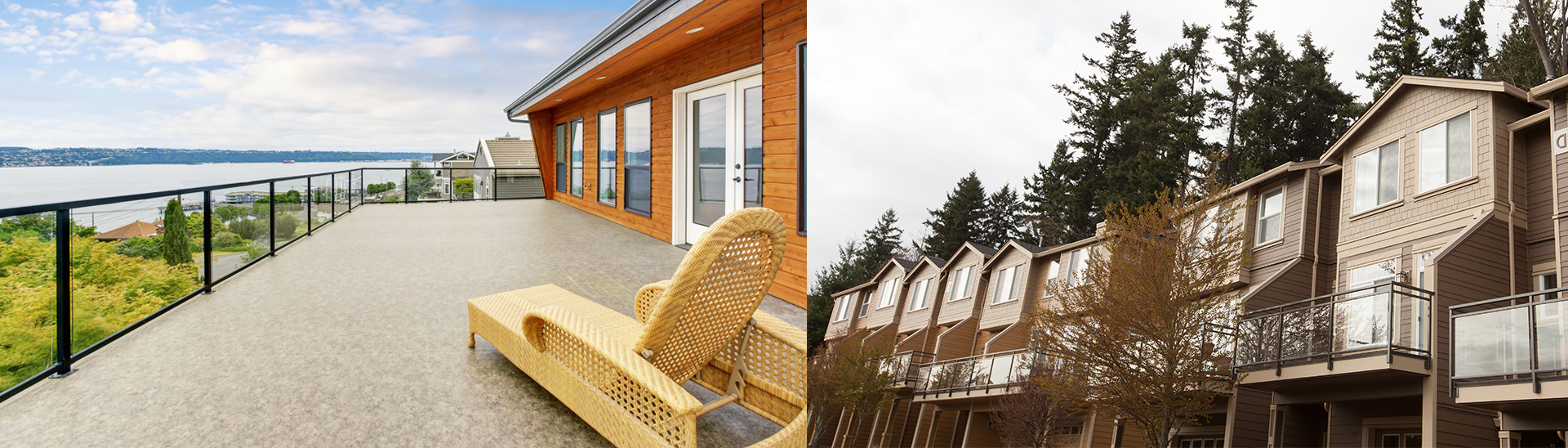
The broader trend here is about intentionality. Architects and designers are increasingly treating railings not as code-mandated safety barriers but as design elements that contribute to the character of a building. A well-chosen aluminum railing system can make a deck feel like a natural extension of the living space instead of something that got bolted on as an afterthought.
This shift is partly driven by homeowners who spend more time on their decks and balconies than previous generations. The work-from-home movement and a broader cultural emphasis on outdoor living have turned the deck into a daily-use room for a lot of families. When you are out there every day, the quality and appearance of every single component starts to matter.
Aluminum railing technology has reached the point where it delivers on all of these expectations at once: strength, beauty, minimal upkeep, code compliance, and environmental responsibility. For architects, builders, and homeowners who want their outdoor spaces to look and perform their best for decades, it is the material that makes the most sense right now.


You must be logged in to post a comment.