The landscape of office design has undergone profound changes in recent years. As businesses acclimate to new working models, office spaces are being reshaped to accommodate evolving demands. At the forefront of this transformation is the rise of flexible and modular office partitions. This article aims to explore the current trends in workspace design, emphasizing the significance of adaptable partitions in navigating the shifting paradigms. By delving into factors such as collaboration, flexibility, and employee well-being, we will unravel how partitions have evolved to cater to the needs of the contemporary workforce.
Shifting Paradigms in Workspace Design
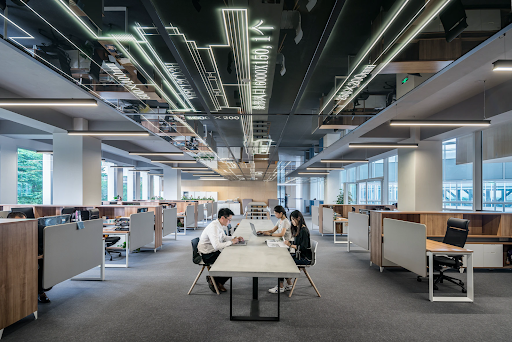
Traditionally, office spaces were dominated by enclosed cubicles that offered privacy and a sense of personal space. However, the modern workplace has witnessed a significant shift towards open-plan layouts. This transformation aims to foster collaboration, communication, and creativity among employees. However, the absence of physical barriers can pose challenges in terms of acoustics, visual distractions, and the preservation of individual focus.
The Rise of Modular Partitions
In response to these challenges, flexible and modular office partitions have emerged as an effective solution. These partitions offer a middle ground between fully enclosed cubicles and wide-open spaces, providing the necessary flexibility to adapt to changing team dynamics and work requirements. The modularity of these systems allows for easy reconfiguration, enabling businesses to modify their office layouts without undertaking extensive renovations.
Factors Shaping Partition Choices
Each office environment is unique and must accommodate diverse organizations with highly specific goals. As such, when selecting modular partitions, designers must carefully balance a number of important factors:
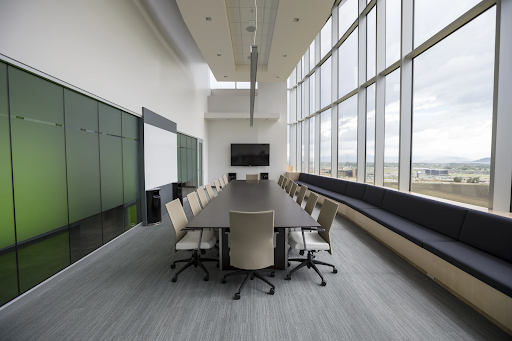
- Collaboration: Modern office environments prioritize seamless collaboration, and partitions play a pivotal role in facilitating this. Glass partitions, for instance, promote visual connectivity while maintaining a sense of separation. They enable teams to engage while ensuring that individual workstations remain acoustically isolated.
- Flexibility: Adaptability is key in today’s rapidly changing business landscape. Modular partitions offer the agility to adjust office layouts quickly, accommodating team expansions, restructures, and the integration of new technologies.
- Employee well-being: The well-being of employees has become paramount in contemporary office design. Partitions contribute to creating a conducive work environment by optimizing acoustics, providing visual privacy, and regulating temperature and airflow.
- Cost-effectiveness: While the upfront cost may be slightly higher, opting for high-quality, durable partitions can be a cost-effective investment in the long run. Quality partitions offer longevity and require minimal maintenance.
When each of these diverse factors is adequately accounted for, decision-makers can put themselves on the right track to selecting partitions that align with the business goals.
Modern Office Partitions and Styles
Office partitions have evolved significantly over the years to meet the changing needs of the workforce. Some of the most trendy modern solutions include:
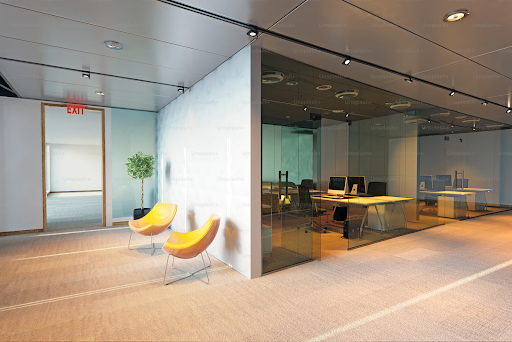
- Glass partitions: Glass office partitions cost may be slightly higher than other materials, but they offer excellent transparency, creating a sense of spaciousness and allowing for natural light to flow through the workspace.
- Acoustic partitions: These partitions are designed to absorb sound, reducing noise levels and distractions in open-plan offices.
- Green partitions: Sustainable partitions made from eco-friendly materials such as bamboo and recycled plastic contribute to a healthier and more environmentally responsible workspace.
By evolving parallel to modern work trends, office partitions can help businesses make the most of their finite space.
Navigating Partition Selection
Architects, designers, and decision-makers must be cognizant of the various partition options available to create a space that aligns with the organization’s unique needs. Here are some key considerations:
- Material selection: Glass, fabric, and wood are popular partition materials, each offering distinct advantages. Glass partitions, particularly, provide transparency and openness while maintaining sound insulation.
- Customization: Adaptable partition systems allow for customization based on specific requirements, accommodating varying heights, incorporating storage solutions, and integrating technologies such as whiteboards or screens.
- Acoustics: Controlling noise levels is crucial for employee focus and productivity. Partitions with acoustic properties, such as sound-absorbing panels or double glazing, can help mitigate distractions and enhance concentration.
- Aesthetics: Partitions can significantly influence the overall aesthetic of an office space. Selecting partitions that complement the existing design and create a cohesive environment is essential.
At the end of the day, the best office partitions will balance the lines between form and functionality, boosting the ambiance of the workspace while enhancing professional performance.
Office Partitions in the Modern Workspace
The evolution of office partitions reflects the dynamic nature of contemporary workspace design. As businesses embrace flexible working models and prioritize employee well-being, modular partitions offer an effective means to navigate the shifting paradigms. By considering factors like collaboration, flexibility, and cost-effectiveness, architects, designers, and decision-makers can create adaptable and inspiring office environments that empower employees, foster innovation, and drive success. For more of the latest trends in contemporary commercial construction, explore the resources at The Archspace for the leading insights in the industry!
Written By Sam Willis
Sam Willis is a freelance writer who loves sharing his knowledge and expertise in residential and commercial real estate, as well as engineering and construction. He lives in Atlanta, Georgia where he enjoys spending time with his wife and researching real estate trends in his free time. Sam’s work as a freelance writer can be found on Building Product Advisor, a construction industry resource site.
Explore various ideas related to office areas here – Office Spaces · The Archspace




Leave a Reply