
Every building begins long before the first shovel hits the ground. It starts as an idea sketched, refined, and developed into drawings that carry both creativity and intent. Architects carefully consider form, function, and experience, crafting spaces that are meant to inspire and perform.
But between these carefully designed plans and the finished structure lies a phase that is often overlooked, yet incredibly influential. Turning drawings into reality requires more than vision; it requires precision. Knowing exactly what materials are needed, in what quantity, and at what stage of the project can make the difference between a smooth execution and a costly struggle.This is where material takeoffs quietly become one of the most important foundations of a successful build.
Understanding Material Takeoffs Beyond the Basics
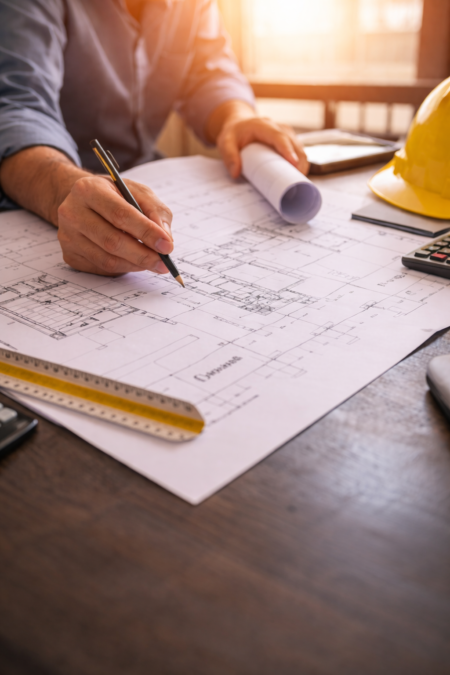
At its core, a material takeoff is the process of extracting quantities of materials directly from construction drawings. However, reducing it to just numbers would miss the bigger picture.
A well-prepared takeoff is not simply a list, it is a detailed interpretation of a design. It translates abstract drawings into tangible requirements, helping teams understand what the project truly demands. Every square foot of flooring, every cubic meter of concrete, and every structural component must be accounted for with accuracy.
When this process is handled with care, it provides clarity. It allows teams to move forward with confidence, knowing that the groundwork has been properly laid. When it is rushed or inaccurate, however, the consequences often show up later through delays, budget overruns, or compromises in quality.
Bridging the Gap Between Design and Execution
There is always a subtle gap between what is designed and what gets built. Architectural drawings are often layered with detail and intent, but they are not always created with construction logistics in mind.
Contractors, on the other hand, operate in a world where precision is everything. They rely on clear quantities, timelines, and material availability to execute the work efficiently.
Material takeoffs act as the bridge between these two perspectives. They interpret design in a way that aligns with execution, ensuring that nothing is left to assumption. This alignment becomes especially important in complex projects, where even small discrepancies can lead to significant disruptions.
By connecting design intent with practical requirements, takeoffs help ensure that what is imagined can actually be built smoothly and accurately.
How Accuracy Shapes the Entire Project Lifecycle
Accuracy in material takeoffs has a ripple effect across the entire construction process. It influences decisions at every stage, from early budgeting to final execution.
When quantities are precise, cost estimation becomes far more reliable. Project stakeholders can make informed financial decisions without constantly adjusting expectations. This stability not only reduces stress but also creates trust among clients, contractors, and designers.
At the same time, accurate takeoffs improve how materials are procured and managed. Instead of over-ordering out of caution or under-ordering due to miscalculations, teams can strike the right balance. This leads to smoother workflows, fewer delays, and better use of resources.
Over time, these efficiencies add up, contributing to projects that are not only completed on schedule but also aligned more closely with their original vision.
The Quiet Role of Takeoffs in Sustainable Construction

Sustainability has become a major focus in modern architecture, influencing how buildings are designed and constructed. While much attention is given to materials and energy efficiency, the role of planning is just as important.
Material takeoffs play a subtle yet powerful role in reducing waste. When quantities are calculated accurately, there is less excess material left unused. This not only saves money but also reduces the environmental footprint of a project.
In many ways, thoughtful planning is one of the simplest forms of sustainable practice. It ensures that resources are used responsibly, without unnecessary surplus or repeated procurement.
As the industry continues to move toward more environmentally conscious approaches, the importance of precision in early stages will only grow stronger.
How Technology Is Changing the Way We Plan
The process of material takeoffs has evolved significantly over time. What was once done manually using printed drawings and scale measurements is now supported by advanced digital tools.
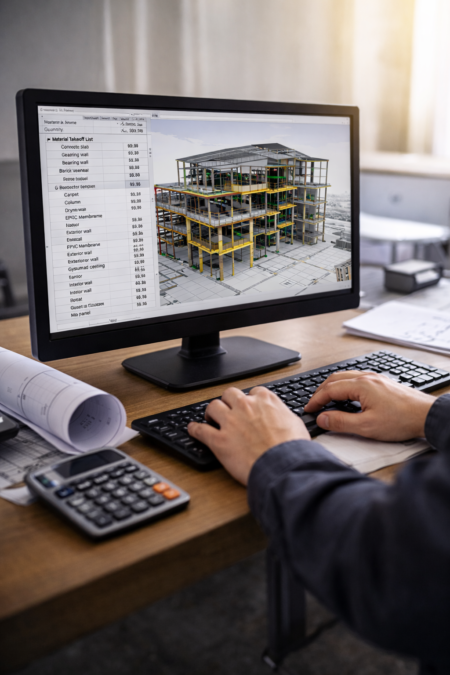
Today, professionals can work directly with CAD and BIM models to extract quantities with greater speed and accuracy. These tools allow for real-time updates, meaning that as designs change, material requirements can be adjusted almost instantly.
Despite these advancements, technology does not replace expertise, it enhances it. The ability to interpret drawings, understand construction methods, and anticipate challenges remains essential. Digital tools simply provide a more efficient way to apply that knowledge.
This combination of human insight and technological support is what defines modern construction planning.
Why This Matters More Than Ever for Architects
Material takeoffs are often seen as part of the contractor’s workflow, but architects who engage with this process gain a deeper understanding of how their designs come to life.
When architects consider material quantities early on, they can design more efficiently. They can make informed decisions about materials, reduce unnecessary complexity, and better align their ideas with practical constraints.
This doesn’t limit creativity, it strengthens it. By understanding the realities of construction, architects can create designs that are both imaginative and buildable.
In the long run, this leads to projects that stay true to their original intent while avoiding avoidable complications.
Real Impact: When Small Miscalculations Become Big Problems
In construction, small details rarely stay small. A minor miscalculation in material quantity might not seem significant at first, but it can quickly lead to larger issues.
Imagine a scenario where finishing materials run short midway through a project. The delay in sourcing additional materials can disrupt schedules, and differences in batches may affect consistency in appearance. What began as a simple oversight can end up affecting both timelines and design quality.
These situations highlight the importance of getting things right from the start. Accurate takeoffs help prevent such disruptions, allowing projects to progress with fewer interruptions and greater confidence.
Smarter Planning Through Specialized Support
As construction projects grow in scale and complexity, the need for accuracy in both material estimation and validation becomes increasingly important. Beyond calculating quantities, teams also need to ensure that the materials being specified meet the required standards for strength, durability, and performance.
This is where the role of material testing equipment becomes relevant within the broader planning process. By incorporating verified data from tested materials, professionals can make more informed decisions during estimation and procurement. It adds an extra layer of confidence, ensuring that what is planned on paper aligns with real-world performance expectations.
Integrating such considerations into early workflows not only improves reliability but also reduces the chances of rework or unexpected issues during construction. In this way, planning evolves from being purely quantitative to more quality-driven, supporting better outcomes across the entire project lifecycle.
Conclusion: Building Better by Planning Smarter
Every successful building is the result of countless decisions made behind the scenes. While design often takes the spotlight, it is the precision of planning that ensures those designs are realized effectively.
Material takeoffs may not always be visible, but their influence runs through every stage of construction. They bring clarity, reduce risk, and create a strong foundation for execution.
As the construction industry continues to evolve, the value of thoughtful, accurate planning will only become more evident. In the end, building better is not just about what we create but how well we prepare to create it.
Author Bio
Ryan is a quality engineering professional with over two decades of experience in structured testing methodologies and validation systems. As the author of Certified Material Testing, he shares insights on quality planning, measurable testing frameworks, and risk-based assurance practices. Ryan is passionate about helping teams apply disciplined quality principles across industries to achieve consistent and reliable outcomes.




You must be logged in to post a comment.