
I’ll tell you something that still sticks with me. A few years back, I was walking past a mid-rise
project in Delhi — nothing flashy, no massive cantilevers or LED-lit drama — but the façade had
this calm confidence. Clean surfaces, a quiet precision and a finish that caught sunlight without
screaming for attention. It felt… deliberate. Later I found out the architect had used Anometa
panels, not one of the usual ACP or HPL sheets we grew up seeing on site.
That moment nudged me. It made me realise how quietly our industry is shifting. Architects
aren’t just looking for “something that covers the building.” They’re looking for architect-
preferred façade materials that open design possibilities instead of limiting them. And when they
choose, they’re thinking long-term — risk, maintenance, structure, sustainability, client
expectations — the whole picture.
So, let’s break down why Anometa panels are showing up again and again in conversations
about modern façade solutions. Not the brochure version — the real, practical version we see in
meeting rooms, site visits and those late-evening calls with architects who just want the right
material without drama.
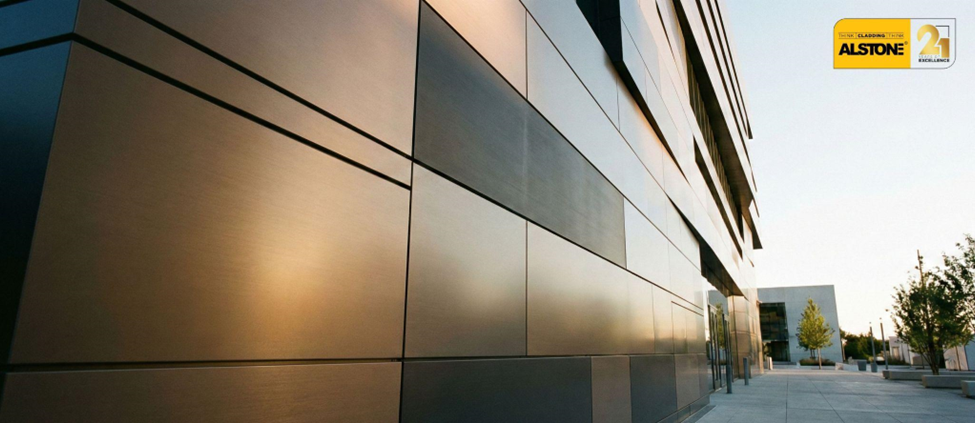
Before we get deeper into why materials like Anometa matter so much today, it’s worth knowing
where they come from. Alstone, founded in 2004 by Mr. Sumit Gupta, has grown into one of
India’s most trusted names in cladding and architectural materials.
What started as a focused vision has now become a brand with two state-of-the-art
manufacturing facilities — one in Dehradun for ACP and another in Kotputli dedicated to
ALCOMB Honeycomb Panels and other advanced façade systems. Both plants run with in-
house coating lines, which is a big reason architects trust the consistency and finish quality we
deliver.
Over the last two decades, Alstone has produced more than 700 million sq. m of Metal
Composite Panels and built a strong network of 500 channel partners and 16 offices across
India. That reach matters because it translates into something very practical for architects —
accessibility, support and reliability when they need it most.
The Old Façade Playbook Is Fading Out
For decades, architectural material selection followed a predictable recipe: ACP, HPL, glass —
choose one, match colours, done. Those materials dominated because they were familiar,
accessible and frankly, the safest default.
But the industry has matured. Projects today involve tighter timelines, stricter sustainability
standards and clients who want something that looks premium but stays stable for decades.
Architects are realising the “standard trio” doesn’t always meet new architectural design
requirements.
That’s where a material like Anometa panels steps in. They’re not tied to old assumptions about
thickness, weight, or category labels. They’re judged by outcomes — durability, design freedom,
lifecycle value and the overall stability of the exterior building envelope.
“Heavier Is Stronger”
Let me be honest — even contractors sometimes say this: “Sir, a heavy panel means a strong
panel.” But that’s not how things work anymore.
Modern composite material engineering has flipped the logic. Strength now comes from internal
structure: tensile properties, flexural strength, impact absorption.
Yes, Anometa panels are lightweight installation materials, but that doesn’t make them fragile.
In fact, the reduced weight lightens the load on framing systems. That leads to faster
installation, lower steel consumption and cleaner detailing for high-rise cladding systems.
And if you’re working on a seismic zone project or anything tall? Lighter panels = better safety
margins.
Architects appreciate that they can choose lightweight façade panels without compromising on
structural stability panels, impact-resistant panels, or wind-load performance.
It’s not about weight anymore. It’s about engineered performance.
“Design Freedom Will Blow the Budget”
This one comes up all the time. Everyone loves unusual shapes until the estimation sheet lands
on the table.
But with Anometa panels, most of the magic happens in the workshop. CNC routing. Grooving.
Bending. Clean edge-finishing. All of it is predictable because the material is designed for it.
This gives architects a wide playground of contemporary building design elements without the
“custom = expensive” fear.
We’ve seen it on commercial façades, institutional buildings and even boutique residences
where designers wanted curves, folds, or angular breaks. The panels handled it smoothly —
and the budgets stayed sane.
This is like having a material that encourages experimentation instead of punishing it. That’s a
huge reason architects gravitate towards modern cladding substitutes like Anometa instead of
sticking to older HPL or aluminium-only solutions.
“Sustainable Means Compromise”
I remember when “eco-friendly” used to be a nice-to-have line in a presentation. Now it’s non-
negotiable.
But here’s the good part: sustainability no longer limits performance.
Today’s sustainable architectural materials can deliver the same — sometimes better —
durability and aesthetics than older options.
Anometa panels score well on lifecycle metrics because they’re:
? lighter to transport
? stable over long periods
? compatible with recyclable panel systems
? designed for energy-efficient façade design
They don’t force architects to choose between performance and principles. You get both —
environment-conscious building solutions that also look good.
And when clients ask about green building points or green building compliance? This material
fits neatly into that conversation too.
“Uniform Finishes Are the Only Safe Choice”
Look, safe façades are fine… but they rarely stand out.
Architects today want depth, texture and elevation character. Something that communicates the
spirit of the building — not just covers it.
With Anometa panels, you get:
? premium surface aesthetics
? modern design textures
? customisable panel colours
? finishes that maintain their tone over time
These aren’t gimmicks. The coatings are engineered for UV stability and weather resistance. So
you’re not introducing aesthetic risk; you’re actually creating premium façade aesthetics that
stay consistent.
I’ve seen even small residential projects transform completely once the façade gets texture
instead of flat monotone. That’s why designers place Anometa in their list of architect-
recommended cladding — because it makes creativity safer.
“High Performance = High Maintenance”
Nope. That may have been true a decade ago, but not now.
The coatings on Anometa panels are built to resist:
? dirt buildup
? coastal moisture
? UV fade
? abrasion
? pollution
Meaning these are genuinely low-maintenance green materials. Perfect for cities dealing with
dust, humidity, or weather fluctuations.
This is where clients notice the difference most. Lower maintenance = lower life-cycle cost. And
honestly, that’s one of the biggest selling points for any architect designing for the long run.
Time, Certainty & Fewer Surprises
Here’s something people don’t say out loud: architects choose materials that make their life
easier.
When a material is:
? easy to explain to clients
? predictable during installation
? backed by test reports
? stable over decades
? consistent in batches
…it becomes a trusted part of their palette.
Anometa panels come with that reliability.
They’re quality-tested façade materials, performance-certified building products and supported
by a clear installation ecosystem. That’s why they’re increasingly seen as the best façade
materials for architects and not just another option on a sample board.
The New Way to Think About Façades
If there’s one takeaway, it’s this: the old assumptions about weight, thickness and “safe
materials” no longer guide good decisions.
The new conversation is about:
? lifecycle value
? engineering performance
? sustainability
? ease of installation
? design freedom
? long-term stability
And that’s exactly where Anometa panels shine.
Whether you’re working on commercial façade applications, residential elevation materials, or
interior panel applications, these panels offer a balance of performance and visual quality that
fits modern expectations — without causing headaches on site.
At the end of the day, architects aren’t just picking a panel.
They’re picking predictability.
They’re picking longevity.
They’re picking confidence.
And that’s why they keep coming

You must be logged in to post a comment.