
The roof used to be little more than a lid to keep the weather out. That era is gone. Now, roofs are deliberate architectural statements, engineered sculptures crowning their structures. They are built to frame skylines, to manipulate light, to redefine space.
These designs do not leap from the drafting table into reality on their own. They require installers capable of turning unconventional shapes into weatherproof, load-bearing realities without compromising the architect’s intent.
Imagine a profile so complex it taxes both the limits of physics and craftsmanship. The future of roof architecture lies precisely in the meeting point where bold design ambition collides with the grit and precision of skilled professionals.
Ways Roofers Shaping the Future of Roof Architecture Design
The following are the major ways roofers are shaping the future of roof architecture design:
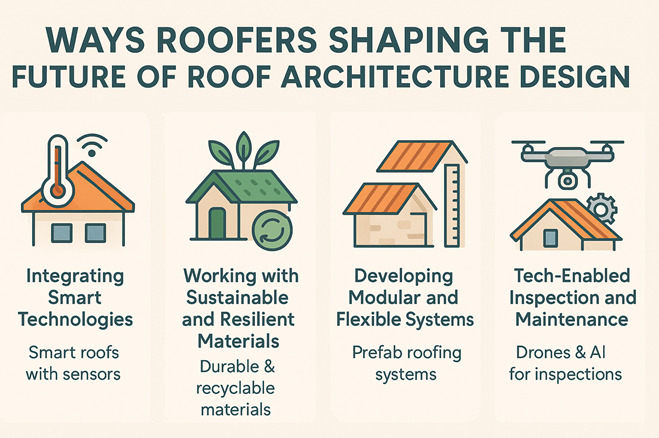
Integrating Smart Technologies
Smart roofs consist of sensors. This helps to monitor temperature, moisture, and weather. Hence, roofers get real-time access to data. As a result, they improve their performance.
Working with Sustainable and Resilient Materials
Roofers are installing durable and recyclable materials. This way, they are reducing their environmental footprint. Also, it increases the lifespan of roofs. Some examples are Green roofs and cool roofing technologies.
Developing Modular and Flexible Systems
Modular and prefabricated roofing systems come with better design options and greater flexibility. These systems minimize waste and ensure more intricate precision. Hence, they are a versatile option for both commercial and residential projects.
Tech-Enabled Inspection and Maintenance
Many roofers are working with drones and AI to inspect roofs. Hence, it is now faster and safer to assess roof conditions. Also, it helps identify potential issues faster. In addition to that, data analytics also help predict maintenance requirements. Hence, roofers can repair an issue before it gets worse.
Structural Innovations in Roof Architecture
Curves that seem to defy gravity. Cantilevers flung out over open air. Spans that look impossible until an engineer runs the load calculations. Roof architecture has evolved into a playground of structural ambition.
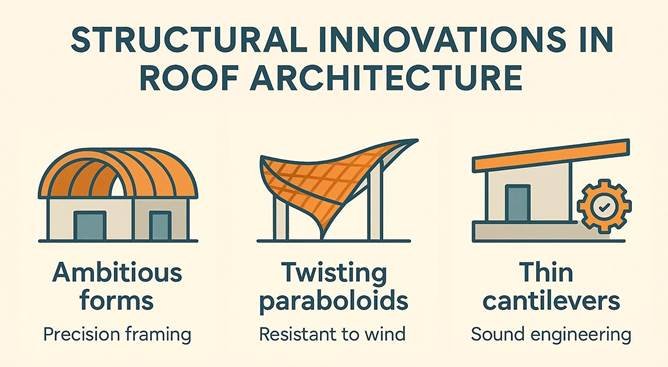
Precision framing supports barrel vaults that sweep dramatically across space. Hyperbolic paraboloids twist and dip like frozen waves, yet remain stable against high wind uplift.
Behind the visuals are core principles that matter: even load paths that channel weight to supports, calculated allowances for thermal expansion so panels don’t buckle, and cleverly tuned forms to cut wind resistance before gusts tear joints apart. The line between sculpture and shelter is now paper-thin in these projects, but it still rests solidly on exacting engineering.
Material Evolution and Roofing Professionals
Advanced metals with alloys resistant to corrosion and thermal creep. Composites with tensile strength that outclass traditional materials. Photovoltaic layers are integrated so seamlessly that they become the roof’s skin.
These breakthroughs are rewriting what a roof can do and what it can withstand. The installers who stay ahead adapt constantly. They switch tools to cut and seal novel profiles without fracturing delicate composites. They recalibrate fastening systems for expansion rates the old carpenters never considered.
When evaluating a team for this work, skip the vague marketing and demand a portfolio featuring projects with unconventional materials. If their crew can build integrated solar arrays or modular composite panels without leaks, they can handle your ambition.
Integrating Sustainability into Roof Design
The smartest roofs in the future will work for the building around the clock. Living vegetation blankets can absorb stormwater and filter air.
Solar-ready membranes keep circuitry protected until panels are mounted. Sculpted drainage channels feed rainwater harvesting tanks without sacrificing aesthetics.
Each choice affects thermal comfort, HVAC load, and utility costs. But sustainability is fragile if installed badly. A green roof without a proper root barrier will destroy your underlayment. Poor drainage will turn it into a swamp.
Solar membranes with careless sealing will fail before their payback period. Master roof installers know precisely where to route water, how to protect primary structures, and how to align green objectives with mechanical integrity.
Adapting Roof Styles for Contemporary Living
Low-slope profiles stretch clean lines across modern builds, serving minimalism and easy maintenance. Butterfly roofs tilt inward to funnel rainwater into collection systems, while lifting interior ceilings toward daylight.
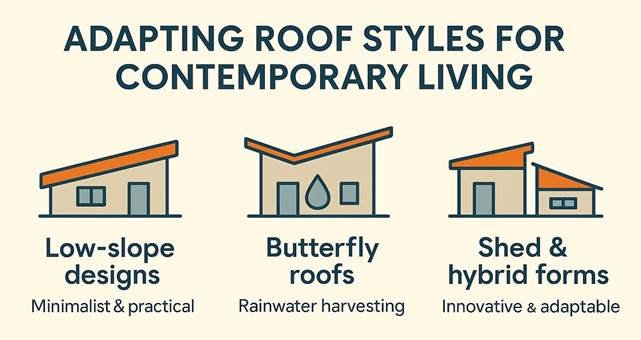
Shed roofs push interior volume upward with a quiet confidence. Hybrids stitch together functions for spaces that demand more clever geometry. Style is not just silhouette. Low-slope roofs require layered insulation for thermal control.
Butterfly valleys require immaculate flashing to keep water out. Shed forms need ventilation tuned for their pitch. The installer’s eye and hand determine whether those profiles work flawlessly or slowly unravel under real-world stress.
Selecting the Right Roofing Partner for Complex Projects
Ambitious designs fail when the crew can’t deliver precision. Credentials matter. Certifications prove the installer has worked under rigorous standards. Portfolios reveal if their experience matches the complexity you need. Real client feedback cuts through the marketing noise.
For large-scale roof transformations, do the following:
- Consider teaming with experienced roofers St George who combine design vision with technical precision.
- Verify their license and insurance before trusting them with structural integrity.
- Nail down warranty terms in writing.
If a crew balks at that level of transparency, they probably aren’t the ones to execute your design.
Blueprinting Tomorrow’s Roof Designs
Digital tools are reimagining design before a single nail is driven. AI modeling can simulate stress and weather patterns in real time. Drone surveys inspect mid-construction details in impossible angles.
3D printing promises components formed with microscopic precision. These advances will sharpen the dialogue between architects and installers, feeding real-time data into hands-on craftsmanship.
But no algorithm can seal a joint against a driving rainstorm. The machines may design in pixels, but only seasoned roofers translate those files into a seamless, durable structure.
Elevate Your Roof’s Potential Today!
Bold designs demand bold execution. Sit down with a crew that understands the language of complex geometry and modern materials. Get specific. Request a site walkthrough, review material samples, and map out installation details before signing contracts.
The most extraordinary roofs are born when visionary design is matched by relentless skill on-site. That mix is where architecture stops being theory and starts shaping the skyline.




You must be logged in to post a comment.