
Architectural photography is about more than just showing what a building looks like. Choices in light, timing, composition, and viewpoint can reveal the ideas behind the design, from how materials react to daylight to how people experience a building or district.
Across three very different projects, Diwani House in Sharjah, Noir Matière in Dubai, and KAFD in Riyadh, these decisions shaped the way I approached photography. One required finding the right sunrise light for a calligraphic stone façade. Another depended entirely on natural light to reveal a dark material palette. The third required more than a year of photography to communicate the scale and complexity of an entire district.
Each project needed a different approach, but the goal stayed the same: to understand what makes the architecture unique and show that in the photos.
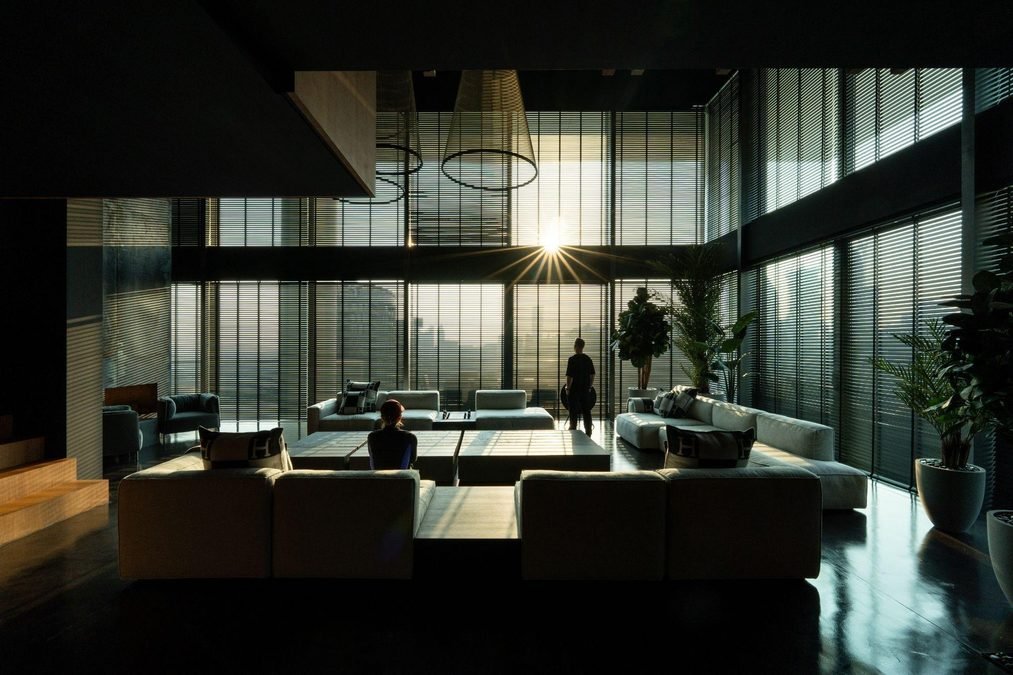
Interior Design: BOOBROOK
Photography: Shoayb Khattab
Let the design determine the light.
I first saw the villa while passing through Sharjah when it was still under construction. Its façade immediately caught my attention, with Arabic calligraphy integrated directly into the stone as a defining architectural element. This distinctive feature became a key focus of my photographic approach, especially in how light could reveal the stonework’s details and character.
Arabic calligraphy is a defining feature of Diwani House. Its main façade features a Kufic inscription across 80 pieces of solid stone, making the calligraphic stonework an important element to consider when photographing the building.
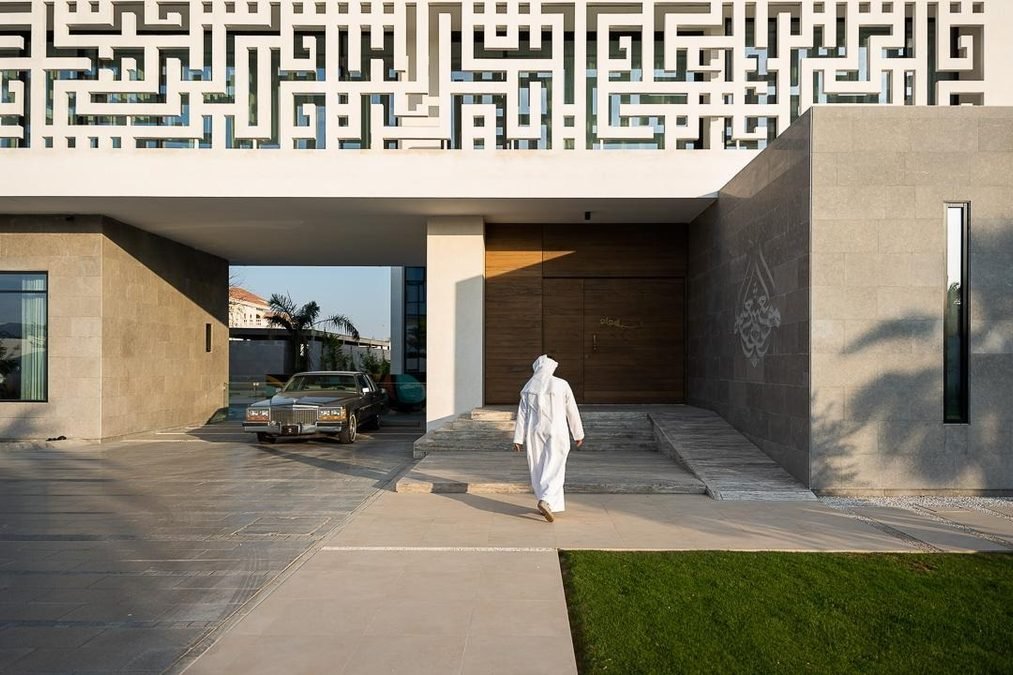
Architecture: Shape Architects
Calligraphy: Zuhair Afaneh
Photography: Shoayb Khattab
Before the shoot, I visited the site to study the light and shapes and plan my shots. This helped me figure out the best time to photograph the façade. We took the main photos at sunrise, when the light highlighted the calligraphic stonework.
We also photographed the house at night, but the sunrise frames became the project’s defining images. Choosing the right light was not purely about making the building look attractive. It helped communicate what made the architecture distinctive in the first place.
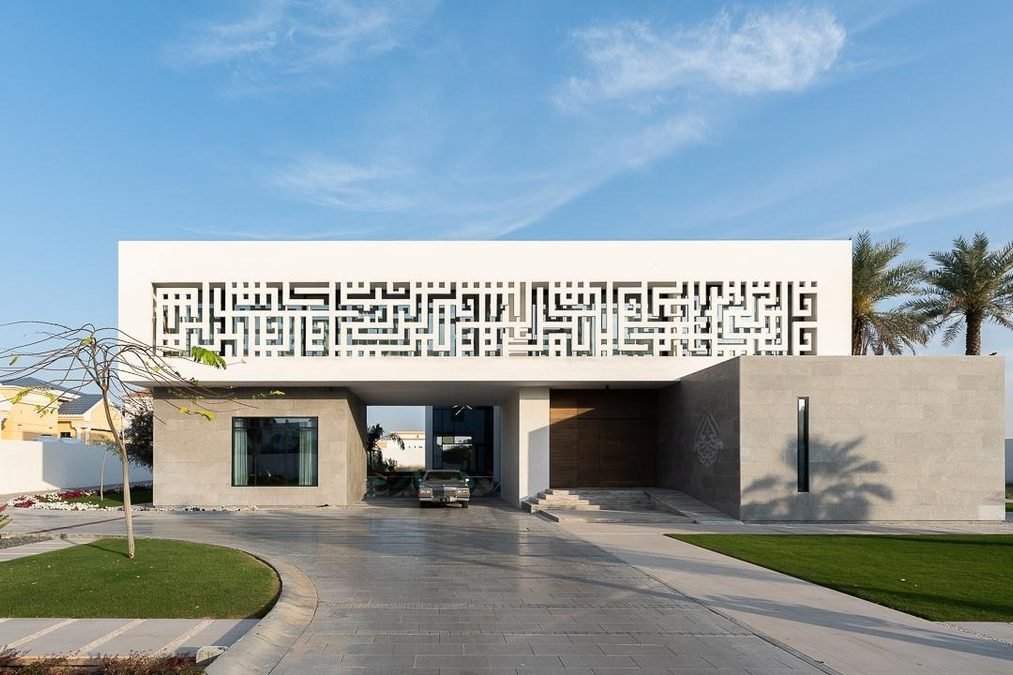
Architecture: Shape Architects
Calligraphy: Zuhair Afaneh
Photography: Shoayb Khattab
Use light to reveal materials.
For Noir Matière at The Lana Penthouse in Dubai, designed by BOOBROOK, I relied entirely on natural light.
The interior features a restrained material palette of polished concrete, blackened oak, oxidized steel, and deep-toned stone. Rather than making the interior appear brighter than it was, I worked with the darkness, using natural light to reveal the materials’ textures while preserving the atmosphere of the space.
This made the timing of each photo important. As daylight moved through the penthouse, different surfaces and textures appeared. I planned each shot for moments when the light came in at the right angle to show the materials without losing the space’s mood.
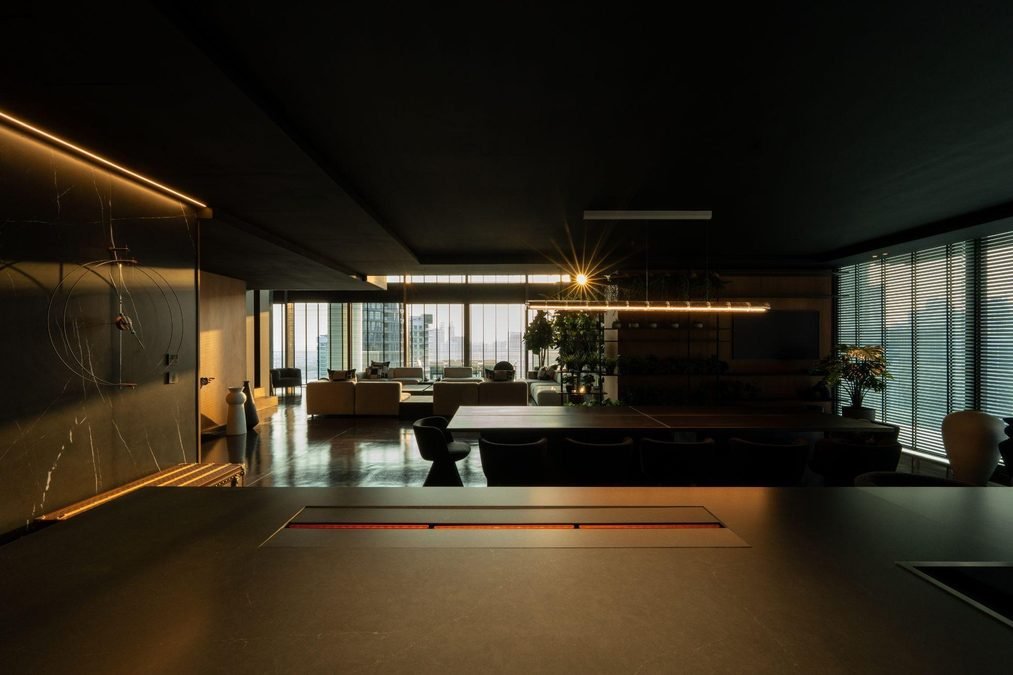
Photography: Shoayb Khattab
Sunset was especially important. At that time, the light on the dark mineral surfaces created depth I couldn’t get with artificial lighting.
In this project, natural light brought out the character of the materials while preserving the atmosphere of the interior.
Use different viewpoints to communicate scale.
Photographing KAFD in Riyadh was a different challenge because I was not just capturing one building. I worked across a whole district with more than 90 buildings, including designs by Zaha Hadid Architects, Foster + Partners, and Henning Larsen.
A project of this scale could not be communicated from one viewpoint or in a single visit.
Ground-level photography allowed me to focus on individual buildings and architectural details. Aerial photography provided another perspective, showing the relationship between buildings and making the district’s wider scale visible.
Switching between these viewpoints mattered because neither one could show the whole project by itself. Close-up shots highlighted single buildings, while wider views showed how they fit into KAFD as a whole.
Time was another part of the process. The commission extended for more than a year, requiring me to return at different times, in different seasons, and under different conditions.
One visit would have shown only one set of conditions. By coming back, I could photograph the district as the light and weather changed, from day to night and from ground to aerial views.
For each building, I produced thousands of images alongside video work, while the published work represents only a fraction of the complete archive.
The aim was not only architectural documentation. The series was also about visual narrative and finding images that could communicate the district’s detail and complexity, and what it represents within Riyadh.
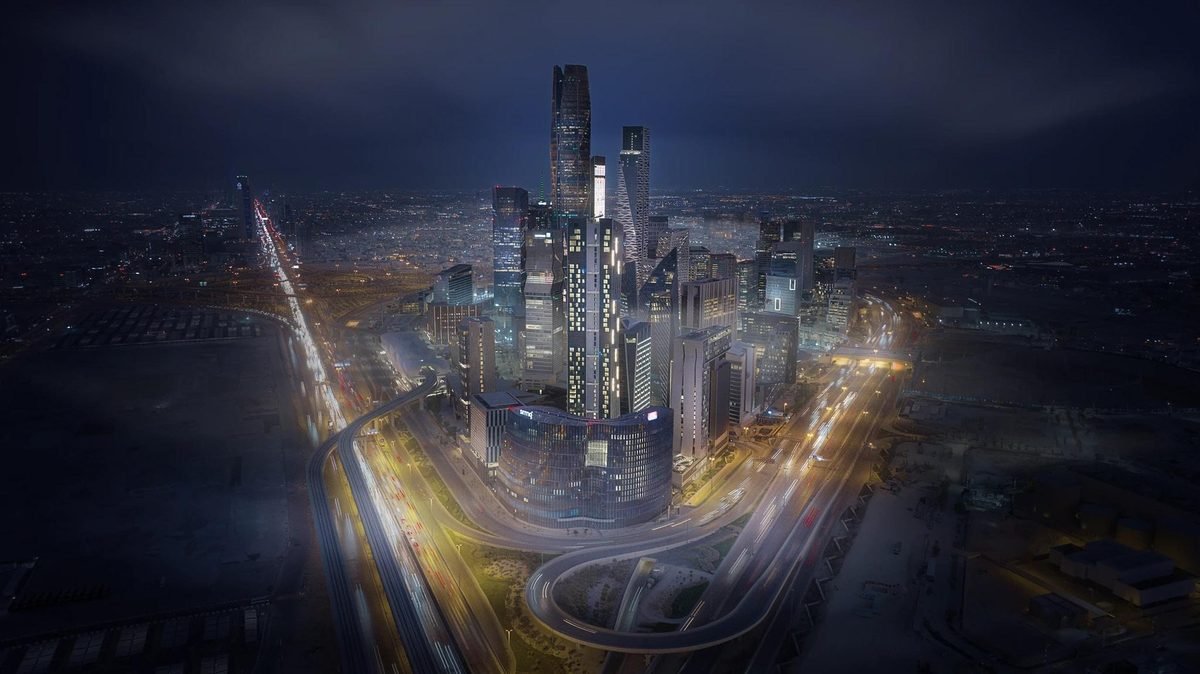
Architecture: Multiple practices, including Zaha Hadid Architects, Foster + Partners, and Henning Larsen
Photography: Shoayb Khattab
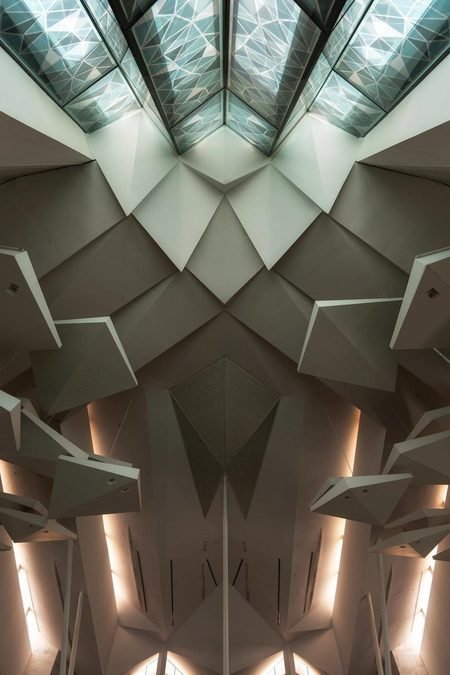
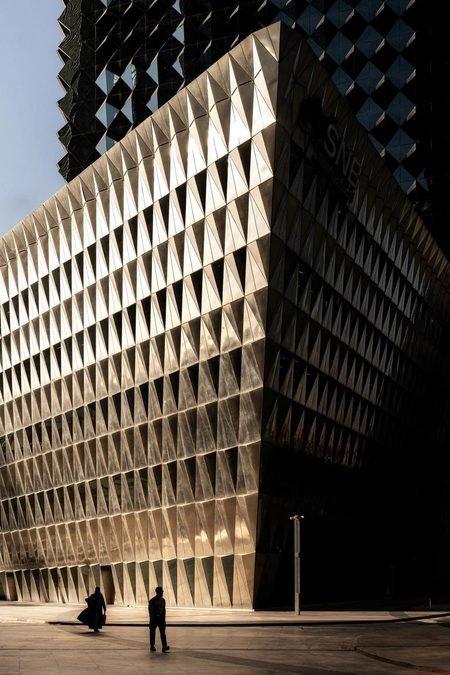
Photography: Shoayb Khattab
Photograph the story, not just the building.
A beautiful photo can show what a building looks like, but architectural photography should also say something about its identity. Before I photograph a project, I try to understand what makes the architecture distinctive, why certain features are there, and what the design is meant to express.
That understanding changes the way I photograph a space.
At Diwani House, the Arabic calligraphy integrated into the façade by Shape Architects became a key focus of my photography. Choosing the right light and timing helped highlight the detailed stonework and capture one of the house’s most distinctive architectural features.
At Noir Matière, BOOBROOK’s use of darkness and its restrained material palette required a different response. Rather than removing the shadows, the photography worked with them to reveal texture and atmosphere.
At KAFD, scale and complexity became the challenge. Communicating an entire district required different viewpoints, changing conditions, and repeated visits.
Not every building can be perceived through one photograph or even one visit. Architecture can contain layers of meaning, material, light, and scale. For me, understanding those layers first helps determine what deserves attention in the photographs.
Conclusion
A good architectural photo shows what makes the building special and the meaning behind it. This might be through the way light falls on a façade, how it brings out a material’s texture, or how a different viewpoint reveals a place’s scale.
Each project needs its own approach because each one has something unique to say. The job of the photograph is not just to make the building look good. It is to understand what makes the project stand out and find a way to show that in the image.
About the Author
Shoayb Khattab is an award-winning architectural photographer and film director based in Dubai, working across the UAE, Saudi Arabia, and the wider Gulf region. His photography focuses on architecture, interiors, and aerial work, capturing the built environment for architects, developers, hospitality brands, and cultural institutions.
His work has received international recognition, including the Architecture MasterPrize Photographer of the Year, Grands Prix du Design Grand Winner in Architecture Photography, and Best Photography Project of the Year at the Créateurs Design Awards. He was also named to the Architizer Visionary 100.
Website: shoayb.net




You must be logged in to post a comment.